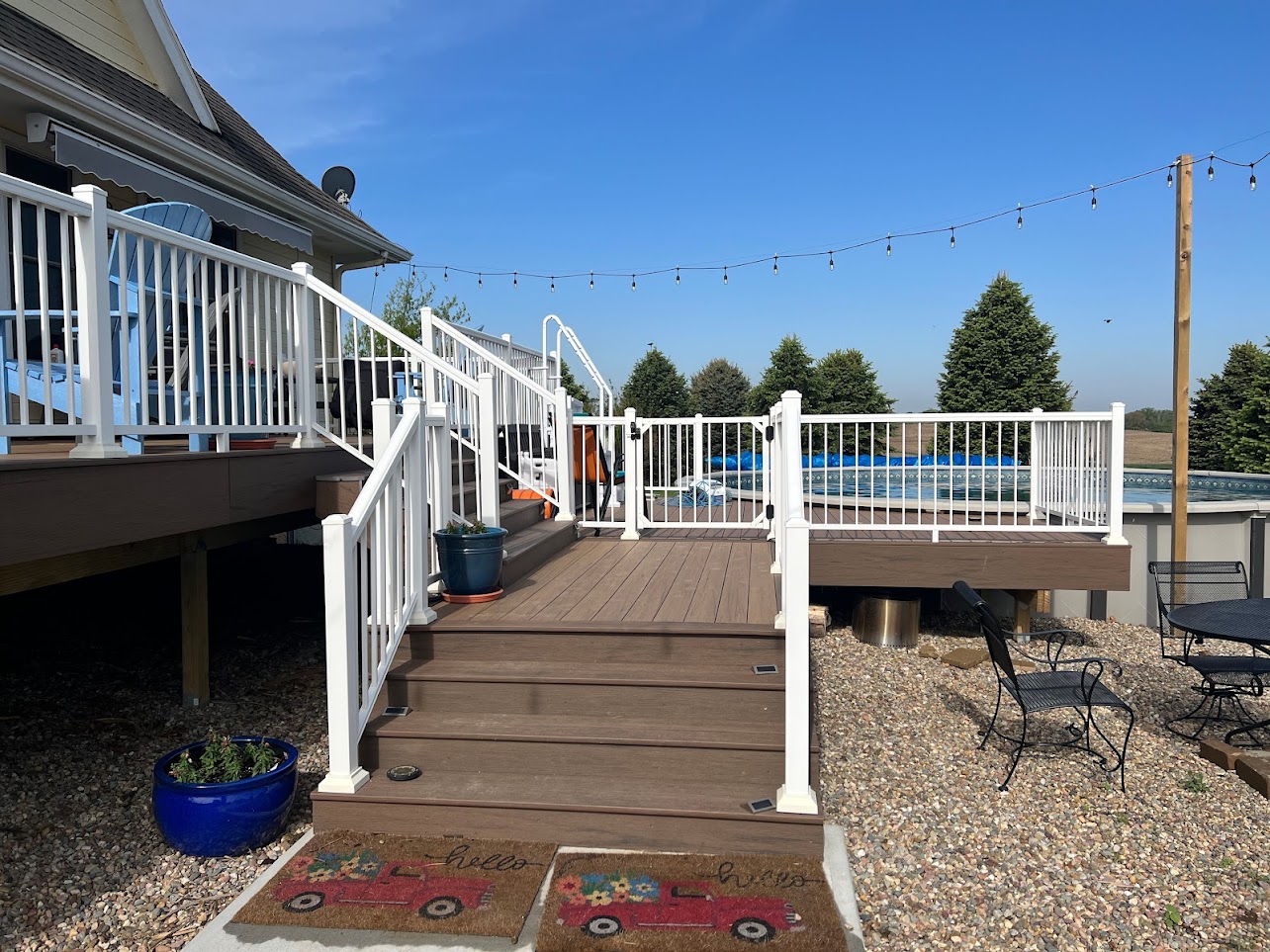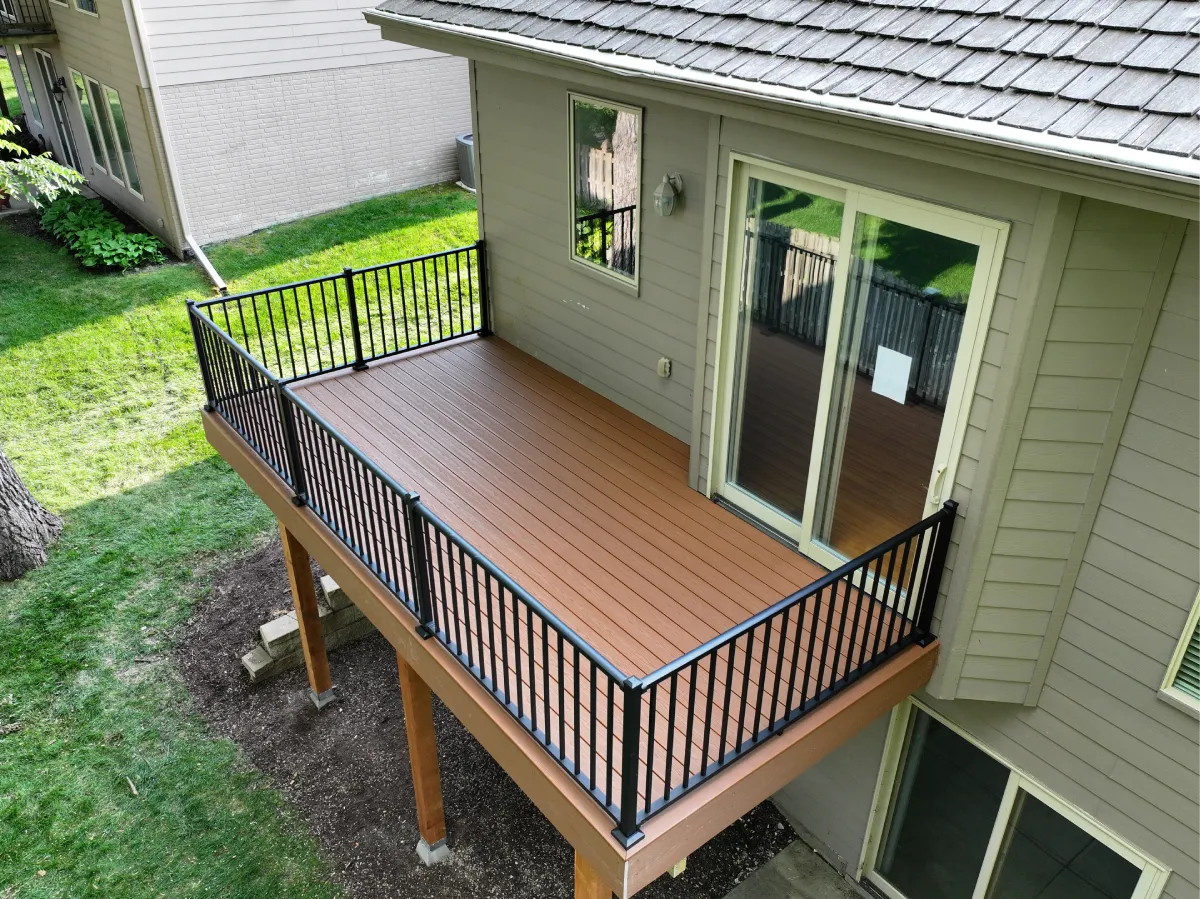



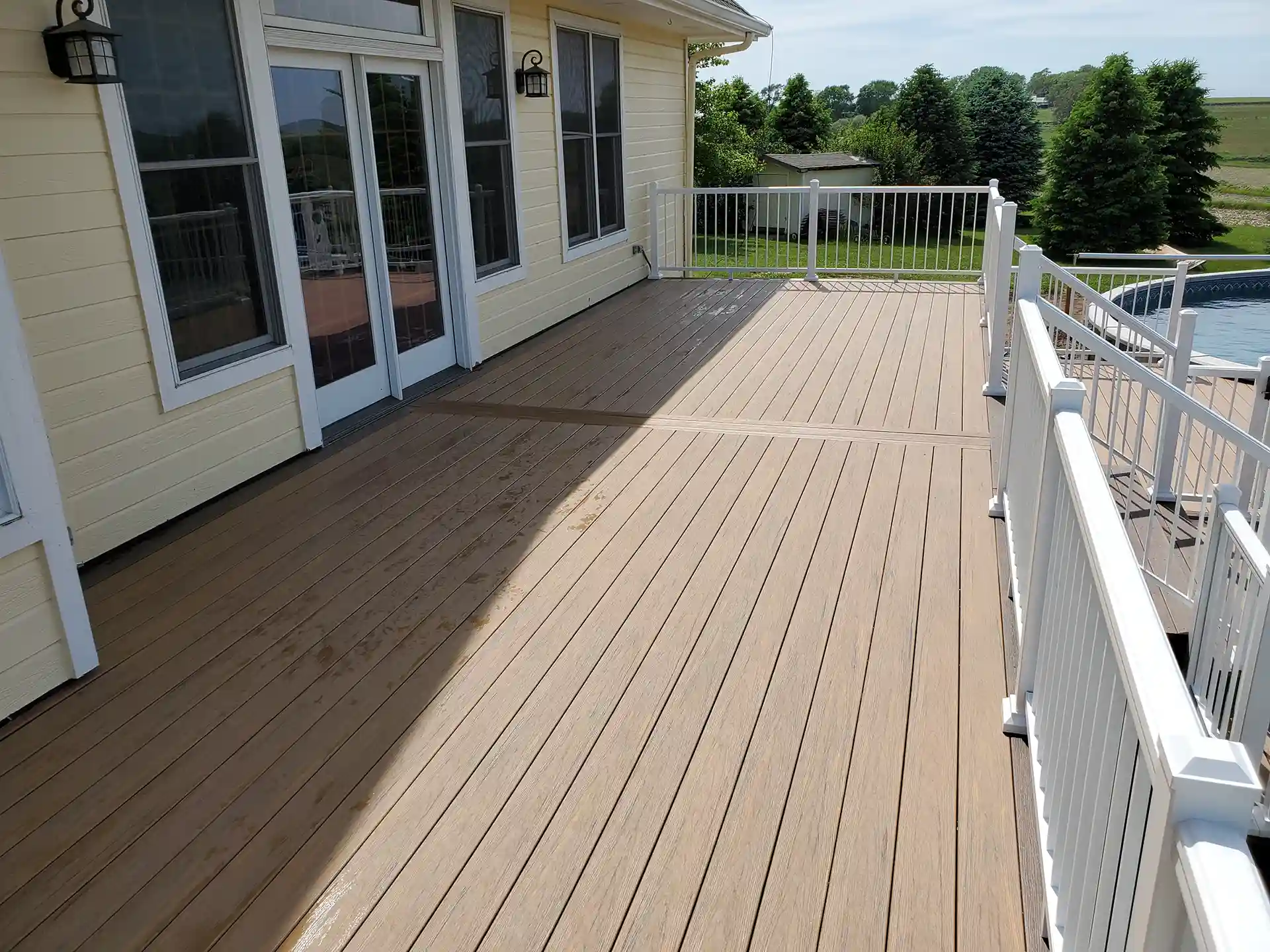
One of the first questions in any deck project is which material to build it out of. There isn’t a right answer for everyone. There’s a right answer for your budget, your maintenance tolerance, how long you want the deck to look new, and what it does for your home’s value down the road.
Omaha raises the stakes on that decision. Backyards here see temperatures from around twenty below zero to over a hundred, freeze and thaw cycles that work on everything, hail through spring and summer, and snow load in the winter. A material that performs fine in a milder climate can have a very different life in eastern Nebraska. Here’s how the main options actually compare.
Baseline: Pressure-Treated Lumber
Pressure-treated (PT) wood is the baseline decking material. It’s wood, treated with chemicals to resist rot and insects, and it’s what most decks have been built from for decades.
Pros:
- Lowest upfront cost of any decking material
- Easy to repair, since a damaged board can be replaced one at a time
- Familiar look that fits a wide range of home styles
- Widely available, so material delays are rare
Cons:
- Needs regular maintenance, with staining or sealing every one to two years to keep it protected
- Will warp, crack, splinter and gray over time, especially in full sun
- Shortest realistic lifespan of the options here before boards need replacing
- Can feel rough underfoot if maintenance is skipped
Who picks this: Homeowners who want the lowest entry cost, don’t mind a maintenance routine, or are treating the deck as a shorter-term feature rather than a decades-long investment.
A note on where we stand: We don’t build PT decking at Wymore Decks & Outdoor Living. The lower quality and shorter lifespan of pressure-treated lumber make it difficult for us to stand behind it under our warranty standards, so it’s not an option we offer.
Resale impact: A well-built PT deck adds value over having no deck at all, but appraisers and buyers tend to treat it as a standard feature rather than an upgrade. If it’s showing its age, graying, splintering, or visibly overdue for stain, it can actually read as deferred maintenance rather than a selling point.
Ballpark cost: This is the baseline everything else is priced against.
A Step Up: Cedar and Natural Hardwoods
Cedar is a softwood, and along with redwood it’s the natural wood option that sits above PT lumber in both look and cost. Denser tropical hardwoods like ipe, tigerwood and cumaru sit a step above that again. All of them offer a richer natural grain and a warmer color than treated pine, and several carry naturally higher resistance to rot and insects without needing the same chemical treatment.
Pros:
- Genuine natural wood look and grain that many homeowners prefer over composite
- Cedar in particular has a distinct color and light weight that’s easy to work with
- Denser hardwoods like ipe are extremely durable and naturally resistant to rot and pests
- Ages to an attractive silver-gray patina if left unsealed, which some homeowners actually want
Cons:
- Roughly one and a half to two times the cost of PT lumber, and denser hardwoods can run higher still
- Still requires regular maintenance, with sealing or oiling needed to prevent graying, cracking and splintering if you want to keep the original color
- Harder to source consistently than PT lumber or composite, which can affect lead times
- Denser hardwoods can be difficult to cut and fasten, adding labor time
How this compares to composite: Cedar itself typically lands in a similar cost range to composite, sometimes slightly less. Denser hardwoods like ipe are a different story. They often cost as much as or more than premium composite once you factor in the material itself plus the added labor to cut and install it. So the pricing isn’t a clean “wood is cheaper than composite” comparison. It depends heavily on which wood species you’re talking about.
Because cedar and composite often land in a similar price range, this is usually the point where we steer the conversation. If a customer is drawn to cedar mainly because they assume it’s the cheaper option, we’ll usually recommend composite instead, since it holds up longer with far less upkeep for close to the same cost. Where we don’t push back is when the reason for wanting cedar is the genuine wood look and feel itself. That’s a legitimate preference composite can’t fully replicate, and it’s worth the added maintenance for homeowners who specifically want it.
Who picks this: Homeowners who specifically want a genuine wood look and are willing to keep up with the maintenance that comes with real wood, or who like the idea of it aging naturally over time.
Resale impact: A well-maintained hardwood deck, especially a denser species like ipe, is often viewed as a premium natural-material upgrade and can support a higher resale value than PT lumber. That said, the resale bump depends heavily on maintenance. A neglected hardwood deck loses this advantage quickly, since buyers can’t always tell a temporarily ugly deck from a poorly built one.
Better: Composite
Composite decking is a blend of wood fiber and plastic, designed to give you the look of wood without the maintenance wood requires. As an example, within the Trex lineup, Trex Select is a good illustration of this level of product. It sits above their entry-level Enhance line but below their premium Transcend and Signature collections. TimberTech offers a similar structure with its Reserve collection, which sits within their composite line above entry-level options like Terrain, but below their top-tier PVC AZEK line. Every major composite brand structures their offerings in a similar tiered way, and this level is the most common upgrade homeowners make once they compare it side by side with PT lumber.
Pros:
- No staining or sealing required, with an occasional wash as the main upkeep
- Won’t splinter, rot or attract termites
- Holds its color and finish far longer than treated wood
- More consistent, straighter boards for a cleaner overall look
- Stands up to hail better than wood does, which matters more here than in most of the country
Cons:
- Roughly one and a half to two times the material cost of PT lumber
- Can still fade somewhat over many years, depending on the product line
- Repairs mean replacing a full board rather than a quick patch
- Can retain more heat underfoot in direct summer sun than wood
Who picks this: Homeowners who want to spend less time maintaining the deck and are planning to stay in the home long enough to get the value out of the upgrade. Generally the most popular middle-ground choice.
Resale impact: Composite decking is a well-recognized upgrade to most buyers, since it signals low maintenance going forward. It typically holds its resale appeal more predictably than wood, since there’s no risk of it looking neglected the way an unmaintained wood deck can.
Best: Premium Composite or PVC Decking
Top-tier composite and PVC boards are built with better fade resistance, deeper color-through technology and longer warranties, often 25 to 50 years depending on the manufacturer. The specific premium products we typically work with generally fall on the higher end of that range, in the 35 to 50 year warranty window.
Pros:
- Best fade and stain resistance of any decking material
- Longest warranties, often significantly longer than standard composite
- Widest range of premium colors and finishes, including boards that closely mimic high-end hardwood
- Little to no maintenance beyond occasional cleaning
- Holds its finished look the longest of any option here
Cons:
- This tier can run roughly two to three times the cost of PT lumber, and noticeably more than standard composite
- Overkill for a smaller or shorter-term project where you won’t be around long enough to benefit from the longer warranty
- Still not immune to heat retention in full sun, same as other composites
Who picks this: Homeowners building their forever deck, doing a larger or more visible project, or who want the best possible look and the least amount of upkeep for the life of the home.
Resale impact: Like most decking materials, this tier isn’t likely to fully recoup its added cost dollar for dollar at resale. That’s true across composite in general, and it’s most pronounced here since the upfront cost is highest. What that number doesn’t capture is buyer perception. A deck that still looks new after a decade, with no visible wear or maintenance backlog, tends to leave a strong impression during a showing, even if that impression doesn’t translate into a line-item increase on an appraisal. The value shows up more in how quickly a home sells and how buyers feel about the property than in a dollar-for-dollar return on the material itself.
How to Actually Decide
None of these is the “correct” choice in isolation. A PT lumber deck built well will serve a homeowner just fine if they’re comfortable with the maintenance and the shorter lifespan. A hardwood deck rewards someone who wants a natural look and doesn’t mind the upkeep it takes to preserve it. A premium composite deck is money well spent if you’re building something you plan to enjoy for the next twenty years or more without touching a paintbrush.
The mistake we see most often isn’t picking the “wrong” tier. It’s not knowing the trade-offs going in, and being surprised either by the maintenance later, the resale expectations, or the price difference at quote time. Knowing where a material sits on this scale before you start comparing quotes makes the whole process a lot less confusing.