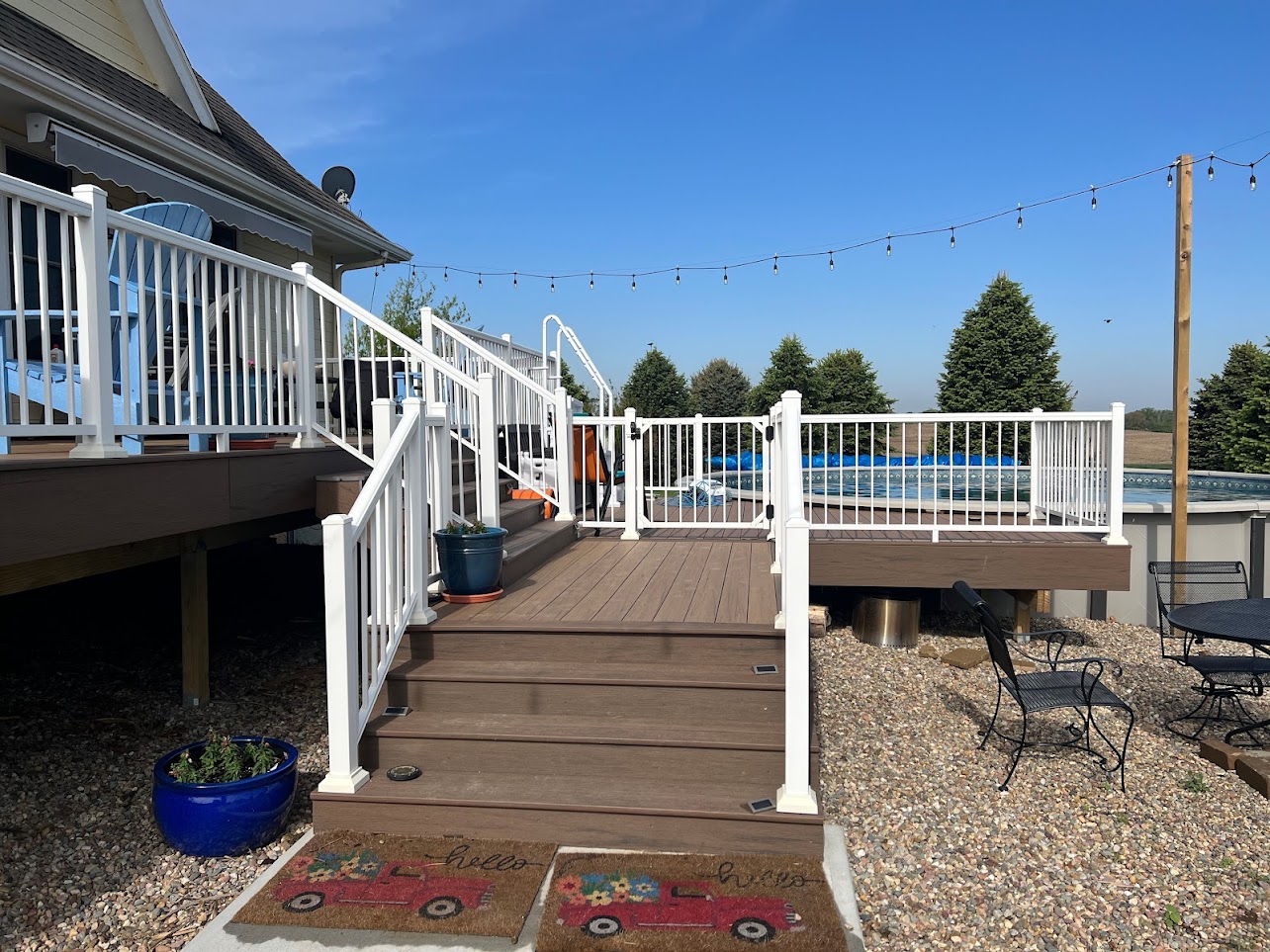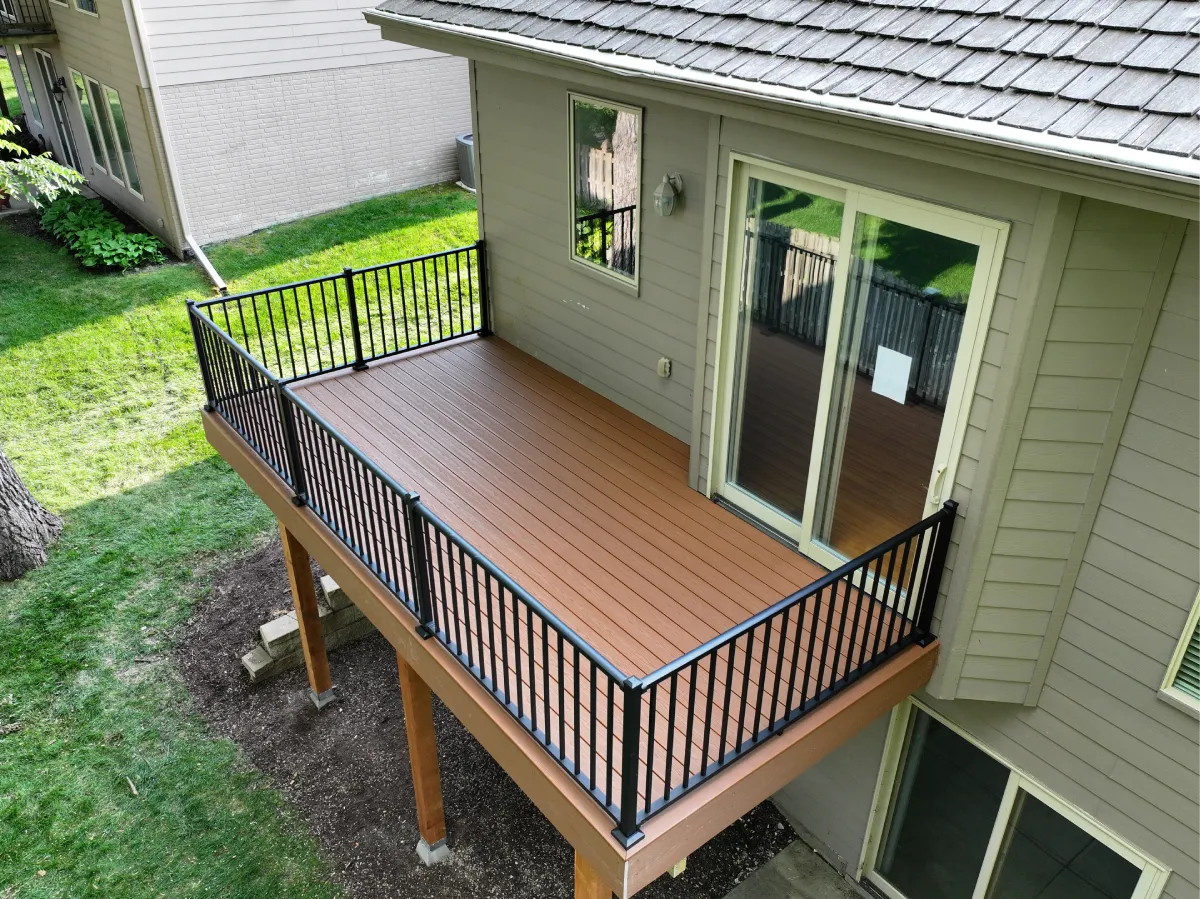



Most homeowners think about lighting after the deck is already built. The boards are down, the railings are up, the contractor has packed up the truck, and suddenly someone realizes the space is unusable after sunset. By that point, the easy wiring paths are sealed behind framing, the clean fixture locations are blocked by hardware, and every workaround costs more than it should.
A lighting plan designed into the build from day one transforms the deck into a usable space morning, evening, and night. This guide walks through how to integrate lighting during the planning phase, what fixtures matter most, and why the timing of these decisions affects the final result more than most homeowners realize.
Why Lighting Belongs in the Design Phase
Lighting is structural before it is visual. Wiring runs through the joist cavity, junction boxes mount inside the framing, and fixture locations dictate exactly where boards get cut. Trying to add these elements after the deck is complete means lifting boards, fishing wire through finished surfaces, and patching holes that never quite blend back in.
Working deck lighting into the design phase costs a fraction of what retrofit installation requires. A design consultation early in the project maps every fixture location, every conduit run, and every switch placement before the first board is fastened, which keeps the install clean and the wiring completely hidden from view.
Step Lights and Stair Safety
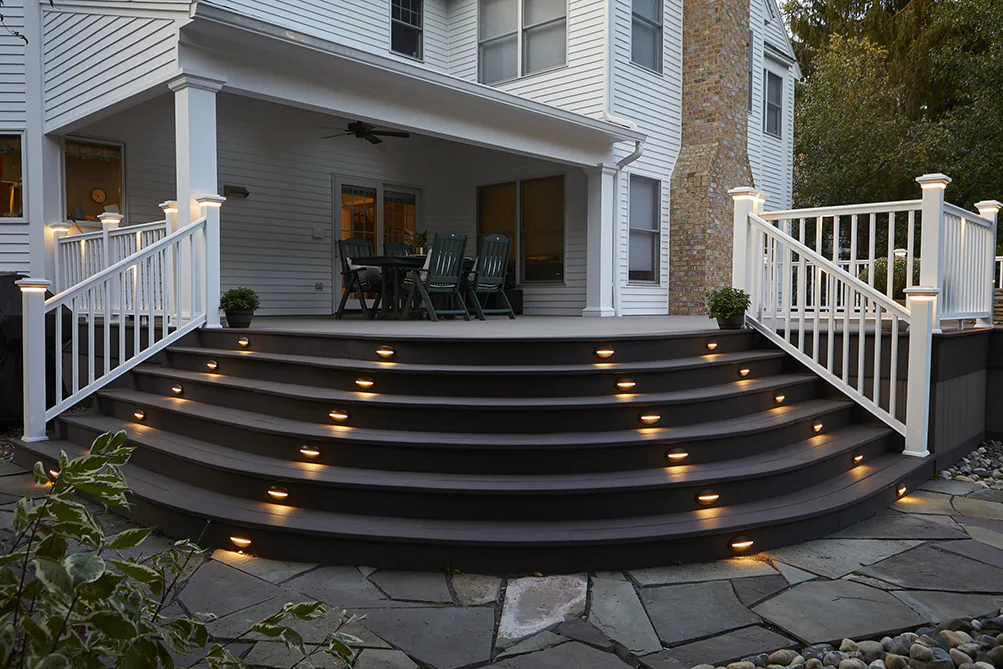
Step lights are the single most important lighting category on any deck. Stairs become hazards after dark, especially on multi-level builds where guests move between zones without realizing where the elevation changes. Recessed step lights mounted into the riser eliminate the risk by casting a soft, even light directly onto each tread.
These fixtures need to be planned before the stair stringers go in, since the wiring runs through the framing and the mounting holes get cut into the riser boards during fabrication. Deck lighting installed at the stair level prevents falls, meets safety standards, and adds a polished architectural feel that retrofit clip-on options can never replicate convincingly.
Wiring and Electrical Planning
The wiring behind a clean lighting plan is invisible, which is exactly why it matters so much. Cables run through pre-drilled holes in the joists, junction boxes mount inside the framing, and the only thing visible after install is the fixture itself. Achieving this finish requires coordination between the deck builder and the electrical team from day one.
Proper deck lighting planning also accounts for circuit load, transformer placement, and weatherproof connections at every junction. A licensed electrician handles the higher-voltage work, while low-voltage fixtures connect through outdoor-rated transformers that step down power safely for the lighting components installed across the deck surface.
Lighting Automation and Smart Control
Lighting automation has changed what a deck can do after dark. Modern systems connect through low-voltage transformers, smart hubs, or Wi-Fi controllers that let homeowners schedule lighting, dim individual zones, or control everything from a phone without walking back inside the house to flip a switch.
Adding automation later is far more difficult than building it in from the start. Smart-ready deck lighting requires specific transformers, compatible fixtures, and pre-installed control wiring that needs to sit in place before the surface boards go down. Planning this during the design phase keeps the final install clean and fully integrated with the home’s existing smart systems.
Choosing Quality Lighting Brands
The fixture itself determines how long the lighting system lasts in Omaha conditions. Cheap big-box options corrode within a few seasons, fail at the connections, and create maintenance headaches that good fixtures completely avoid. Brand selection matters as much as placement, and the gap between premium and budget fixtures is wider than most people expect.
Quality deck lighting brands like In-Lite, Trex, TimberTech, Deckorators, and Westbury build fixtures specifically for outdoor environments. These products carry sealed connections, marine-grade finishes, and warranties that match the deck itself. Specifying these brands during the design phase ensures the lighting system lasts as long as the structure it sits on.
Designing for Omaha Conditions
Omaha weather is rough on outdoor fixtures. Winter brings ice, snow, and salt exposure that destroys cheap metal housings. Summer heat and UV degrade plastic lenses and shorten LED lifespans on inferior products. Spring storms send hail and driving rain that test every gasket, seal, and mounting point on every fixture across the deck.
A deck lighting plan built for Nebraska accounts for these realities by specifying weather-rated fixtures, properly sealed junction boxes, and drainage paths that prevent water from pooling around any electrical component. Doing this work upfront prevents the failures that plague decks built with generic fixtures pulled off a hardware store shelf.
Working With a Builder Who Plans It Right
The cleanest lighting installations happen when the deck builder and the lighting plan come together from the very beginning. A contractor who handles design consultation, framing, wiring coordination, and fixture installation as a single coordinated project delivers a result that looks and functions like a finished system rather than a stack of separate upgrades stitched together.
Asking about lighting during the initial consultation tells you a lot about how a builder approaches the entire project. For expert deck lighting design and installation in Omaha and the surrounding metro area, contact Wymore Decks & Outdoor Living at (402) 290-3715 to schedule a design consultation and plan your build the right way.